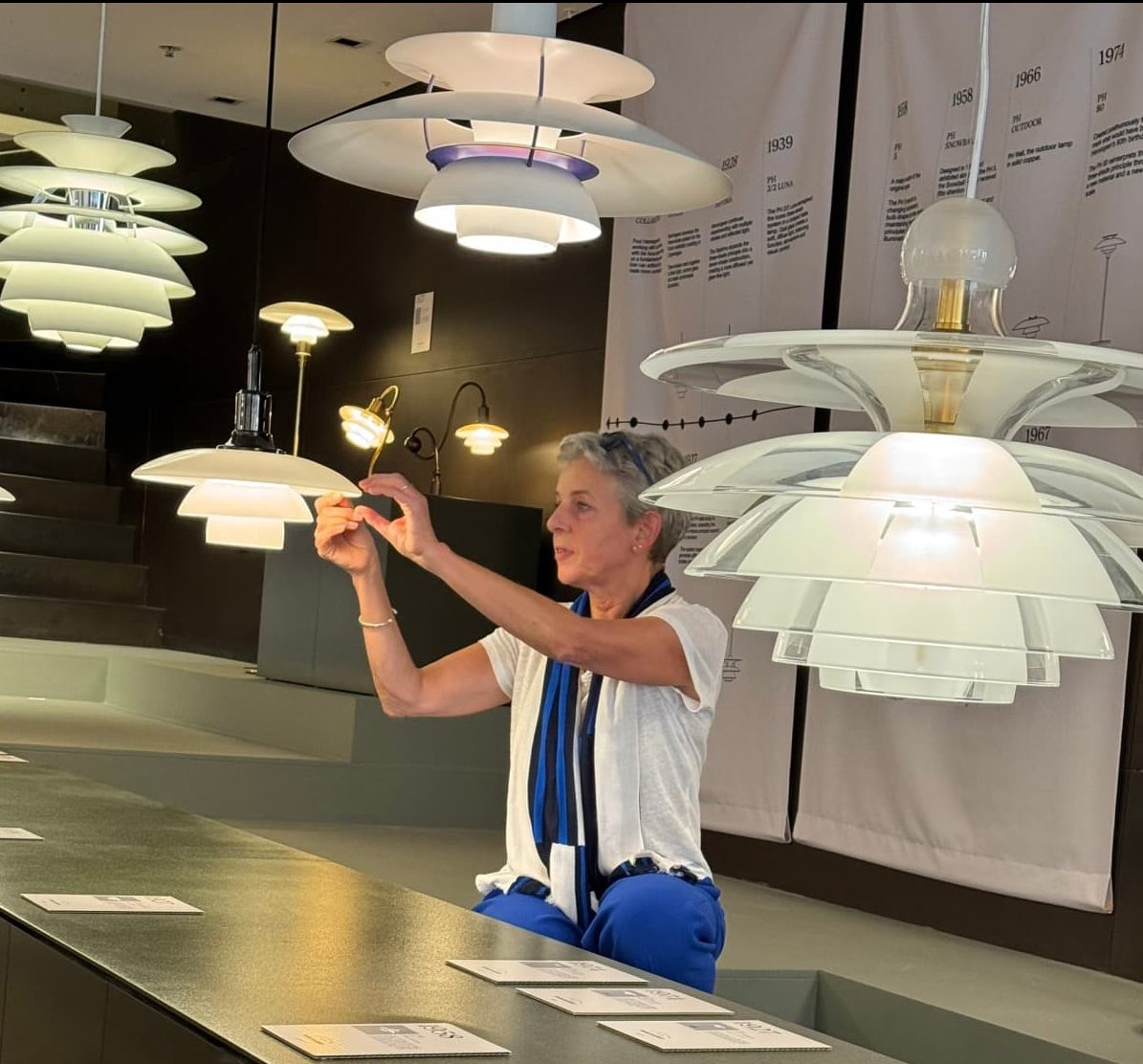
The PH Centenary Collection marks 100 years of Poul Henningsen’s System PH, explained by Louis Poulsen global education lead Ulla Riemer. Image: Authentic Design Alliance
100 years of System PH, Louis Poulsen
Authentic Design Alliance® co-founder Cult has unveiled A Century of Light, an installation marking 100 years of Poul Henningsen’s System PH.
Here to launch the expanded collection, Louis Poulsen global educator Ulla Riemer shared how Henningsen set out to fix the harsh glare of early electric light.
His mother complained that the electric light above the table cast a harsh, unflattering glare. She preferred the soft hues of the candle and oil lamps they were used to. So Henningsen applied mathematical research to calculate how light projects. As a result, he created his three-shade System PH in 1926.
By centring the bulb at its focal point, the spiral shade guides light down the curved shades and spreads it as an even glow. In other words, we see the light, not the bulb.
“To understand a lamp, it’s important to see it both switched on and off. Catalogue or website images can’t show that difference, so she emphasised the importance of experiencing the original in person.” Ulla Riemer.
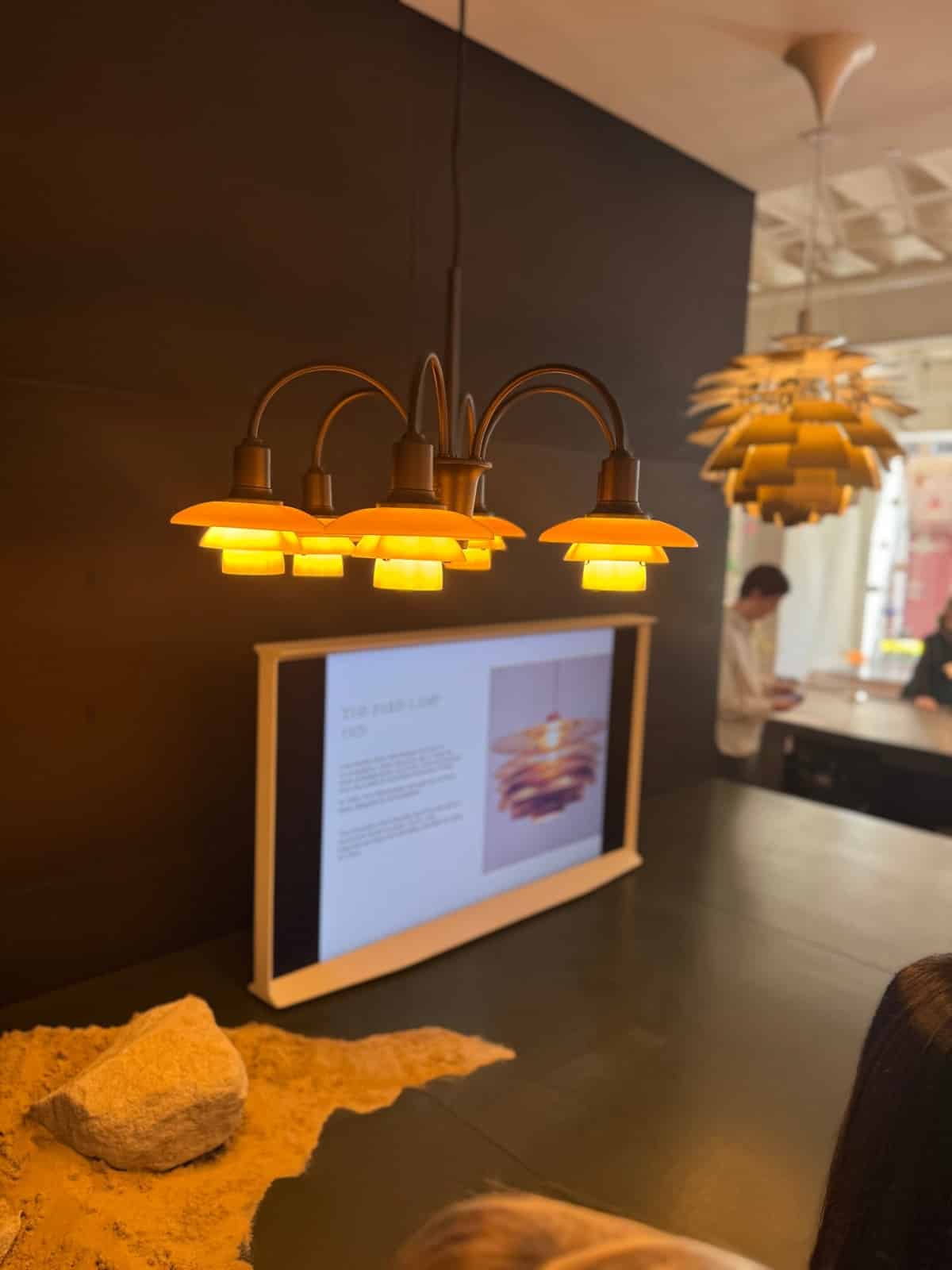
Light from the bulb meets each spiral-shaped shade at a consistent angle and is guided downwards, with minimal glare. Image: Authentic Design Alliance
Original lighting is protected by electrical certifications
The most famous of Henningsen’s designs, PH Artichoke (1958), has 72 individually mounted leaves, angled to hide the bulb from every direction. It’s arguably one of the most recognised lighting designs in history, and Louis Poulsen still hand-assembles this icon in Denmark.
Being one of the most famous of his designs, unfortunately, it has also been widely copied. In fact, the issues with the knock-offs and replicas extend beyond a cheaper, similar shape. For example, many show the bulb and produce glare. As a result, they defeat the purpose of the original design intent.
Replica and copy lighting can be a fire risk
Importantly, it’s unlikely (if ever) copies are certified, and they fail to meet Australian electrical standards. This is an important consideration as uncertified lighting can cause fire risks. Also, licensed electrical trades can rightfully refuse to install hardwired uncertified lamps.
By contrast, original lighting carries Australian certification. This investment by the licensed distributors and brands is to ensure the lamps meet Australian electrical standards. Look for the Regulatory Compliance Mark (RCM) certification, or ask your retailer for it.
In addition, originals hold their value and come with warranties, repairs and replacement parts. For example, resale prices through Cultivated, Cult’s restoration and resale brand, remain close to, and sometimes above, the original purchase price.
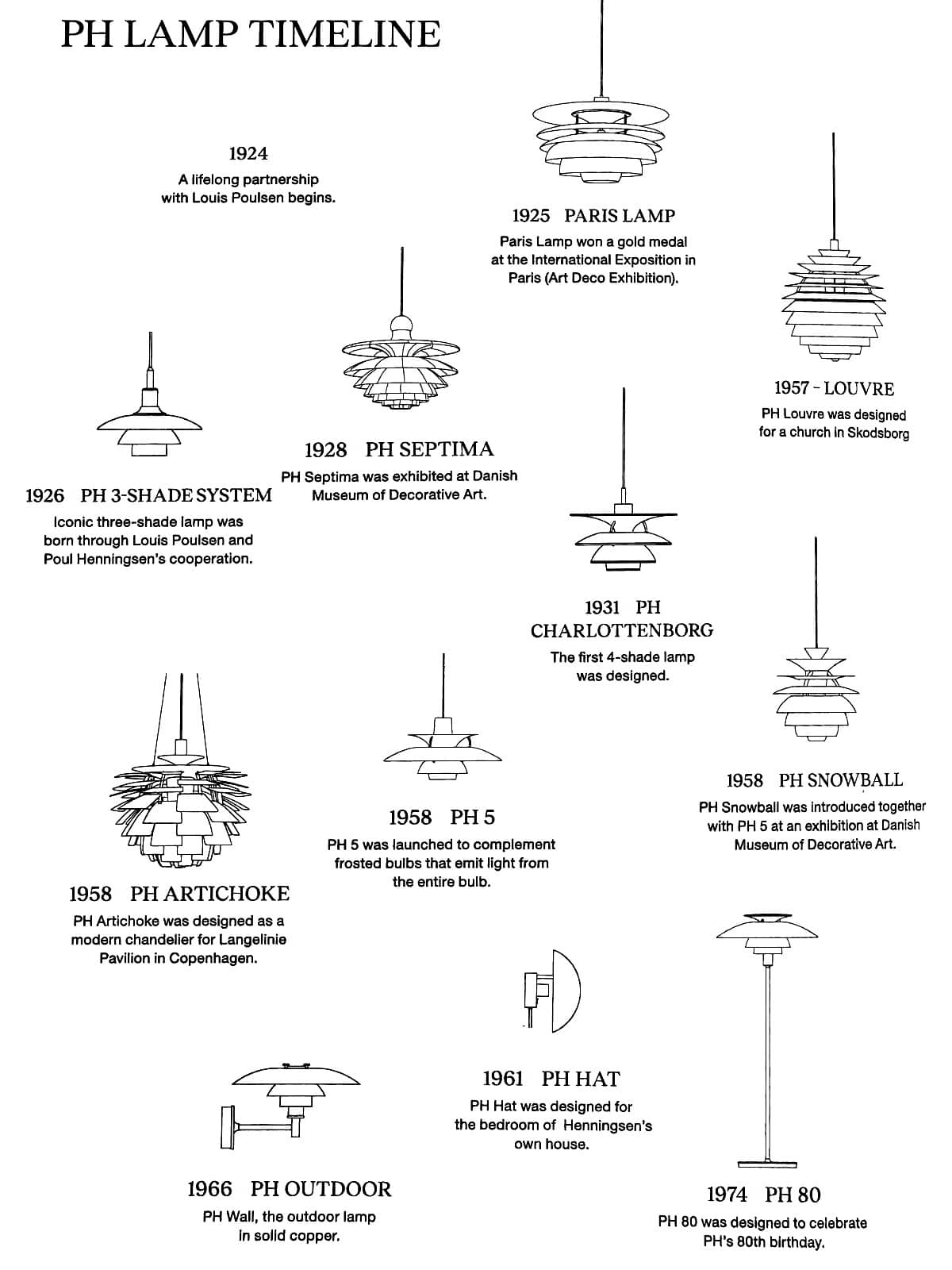
Henningsen’s PH lamps for Louis Poulsen, from the 1925 Paris Lamp to the 1974 PH 80. Image courtesy of CULT and Louis Poulsen.
The Centenary Collection
Launched at 3daysofdesign in June 2026, the PH Centenary Collection reintroduces Henningsen’s 1927 table and floor lamps in lacquered aged brass, with an amber top shade over white opal glass.
It also includes the limited, hand-numbered PH 1/1 chandelier, plus a PH 3/3 pendant and PH 2/2 wall lamp that joined the collection in September.
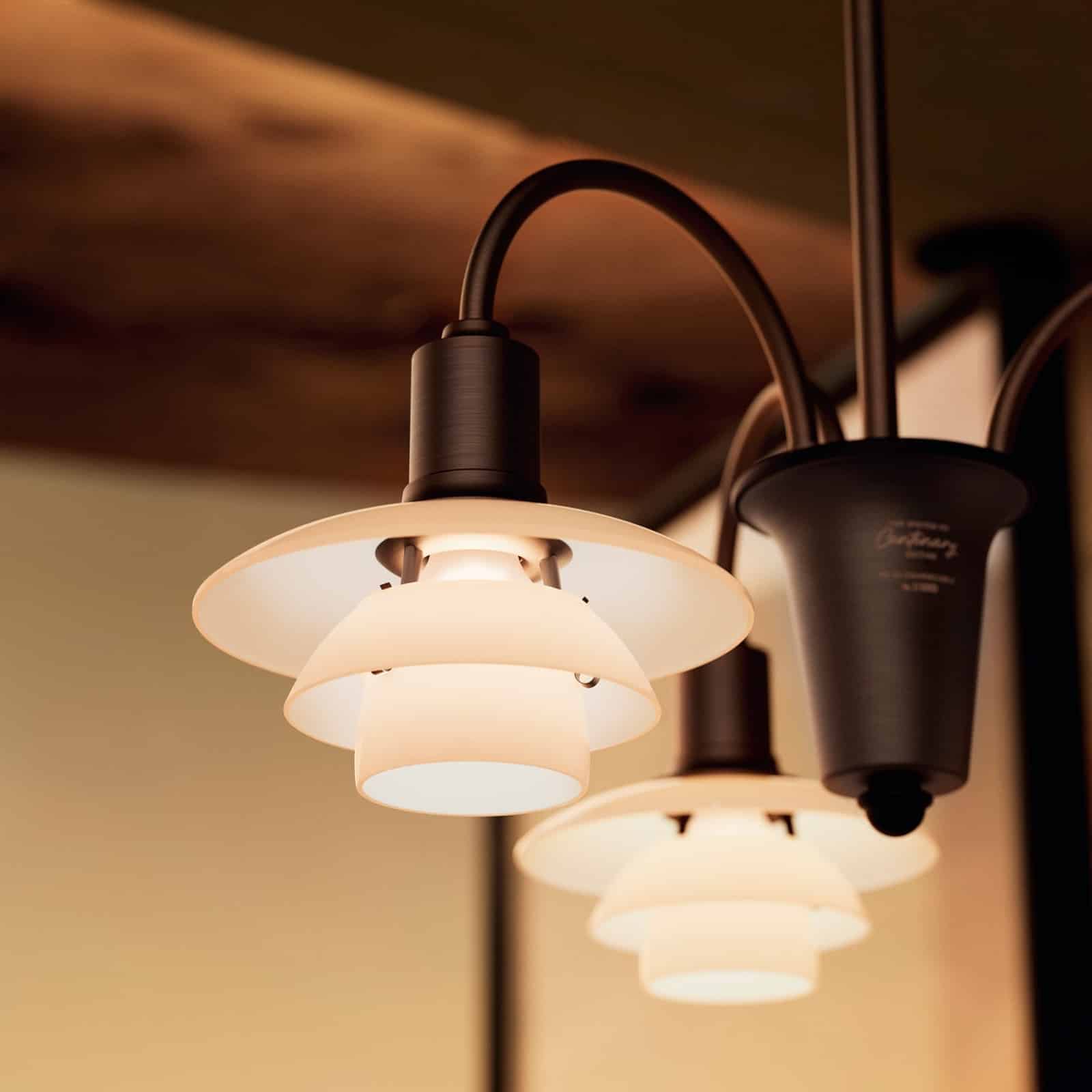
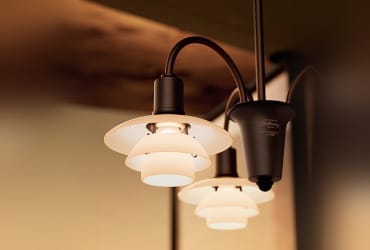
A detail of the 2026 PH Centenary Collection in lacquered aged brass, with white opal glass. Image courtesy of CULT and Louis Poulsen.
See the PH Centenary Collection at CULT showrooms.
FAQ
Who is Poul Henningsen, and what is System PH?
Poul Henningsen was a Danish social commentator and designer who created System PH, a three-shade lighting system, designed in 1926 and produced by Louis Poulsen. Its shades direct and soften light, to hide the bulb to reduce glare, and it is available in 11 different designs.
How can I tell an authentic PH Artichoke?
Buy from an authorised Louis Poulsen stockist. In Australia, Cult distributes Louis Poulsen. By contrast, copies often show the bulb from some angles, create glare, and come in sizes Louis Poulsen has never made.
Is it safe to buy lighting online?
Check for the Regulatory Compliance Mark (RCM) and buy from an authorised supplier. Uncertified lighting may not be safe to install, and typically isn’t backed by warranty, supplier repairs or available spare parts.
Do original Louis Poulsen PH lamps hold their value?
Yes. In fact, vintage PH lamps often resell close to the price of a new lamp, and sometimes above it.
Where can I see the PH Centenary Collection in Australia?
At Cult showrooms, where you can see the lamps both lit and unlit.